Wednesday, March 31, 2010

Romanatic (for Romantic)

On March 31, 1889 the Eiffel tower was inaugurated at the Exposition Universelle in Paris. At 300m, the tower is twice as tall as the Great Pyramid at Giza (146.5 m). It was built to celebrate the centenary of the French Revolution, in particular the storming of the Bastille.

A competition was held that prompted more than 100 submissions of plans for the monument! Bridge engineer Alexandre Gustave Eiffel was the winning designer, though at the time the judges were skeptical about the aesthetic quality of the iron latticework. I find it hard to believe now, with so many people around the world enamored of the structure and the romantic Parisian life it seems to symbolize.

Romanatic is our typo today, a low probability error that appears 10 times in Worldcat. For more about the Exposition that launched the Eiffel Tower (and another typo!), see our past entry for souvenier*.

(Photo of the tower from Wikimedia Commons.)

Leanne Olson

Tuesday, March 30, 2010

Daguerro* (for Daguerreo*)

The daguerreotype was the first successful form of photography, developed in the 1830s by Louis-Jacques-Mandé Daguerre and Nicéphore Niépce. A copper plate is coated with silver iodide and exposed in a camera. Mercury vapour is used to develop it, and a salt mixture to make it permanent.

Originally, the exposure process took 3-15 minutes, making it too long to be used for commercial, portrait photography, but later bromine and chlorine were added to the process to shorten it to less than a minute.

The image shown here is a photograph of a daguerreotype of Edgar Allan Poe taken in 1848, by W.S. Hartshorn.

A common error in spelling daguerreotype is to leave out the e: daguerrotype. But if you remember that the word comes from Louis-Jacques-Mandé Daguerre's name (which has that e at the end!) it should be easy, right? As easy as remembering Daguerre's three hyphenated given names (?!) or as easy as sitting completely still for 15 minutes while your portrait is taken.

Leanne Olson

Monday, March 29, 2010

Bucaneer* (for Buccaneer*)

The buccaneers were pirates who lurked off the coast of South America and the Caribbean in the 17th century. Surprisingly, these ruthless men actually had their own complex system of rules. Their captains were elected democratically, they shared plunder equally, and they developed complicated systems of insurance for men who became injured.

The word buccaneer actually comes from the French boucan, which is a grill used for smoking dried meat used at sea. The term buccaneer is now used to describe any unscrupulous or cutthroat person, particularly in politics and business.

Buccaneer, like many words with repeating letters, is a tricky one to spell—I always want to add an extra N, and our typo for today has left out the second C. Bucaneer* occurs 4 times in OhioLINK and over 75 in Worldcat.

(The coloured woodcut pictured here is of Sir Henry Morgan, one of the most famous buccaneers, taken from pirates.wikia.com.)

Leanne Olson

Friday, March 26, 2010

Charater* (for Character*)

Cha-cha is short for Cha-cha-cha, and in the shot to the right, where the dancers are wearing abbreviated costumes, to say the least, I suppose it's possible that a mere cha might suffice. At any rate, it's a dance in which participants are often rated on a scale of one, two, cha cha cha. I'm not entirely sure how to rate this too-live crew, but it looks like the evening itself was a definite 10. Charater* comes in at an impressive 54 times in OhioLINK, which makes it a typo of "high probability" on the Ballard list. Check for today's typo in your own catalog and make sure the word in question contains all of its characters.

(Patrik Hont sings "Havana for a Night" along with cha-cha dancers in a Valentine's Day cabaret at the Blue Moon Bar, Stockholm, Sweden, 2003, from Wikimedia Commons.)

Carol Reid

Thursday, March 25, 2010

Augum* (for Augment*, Argument*)

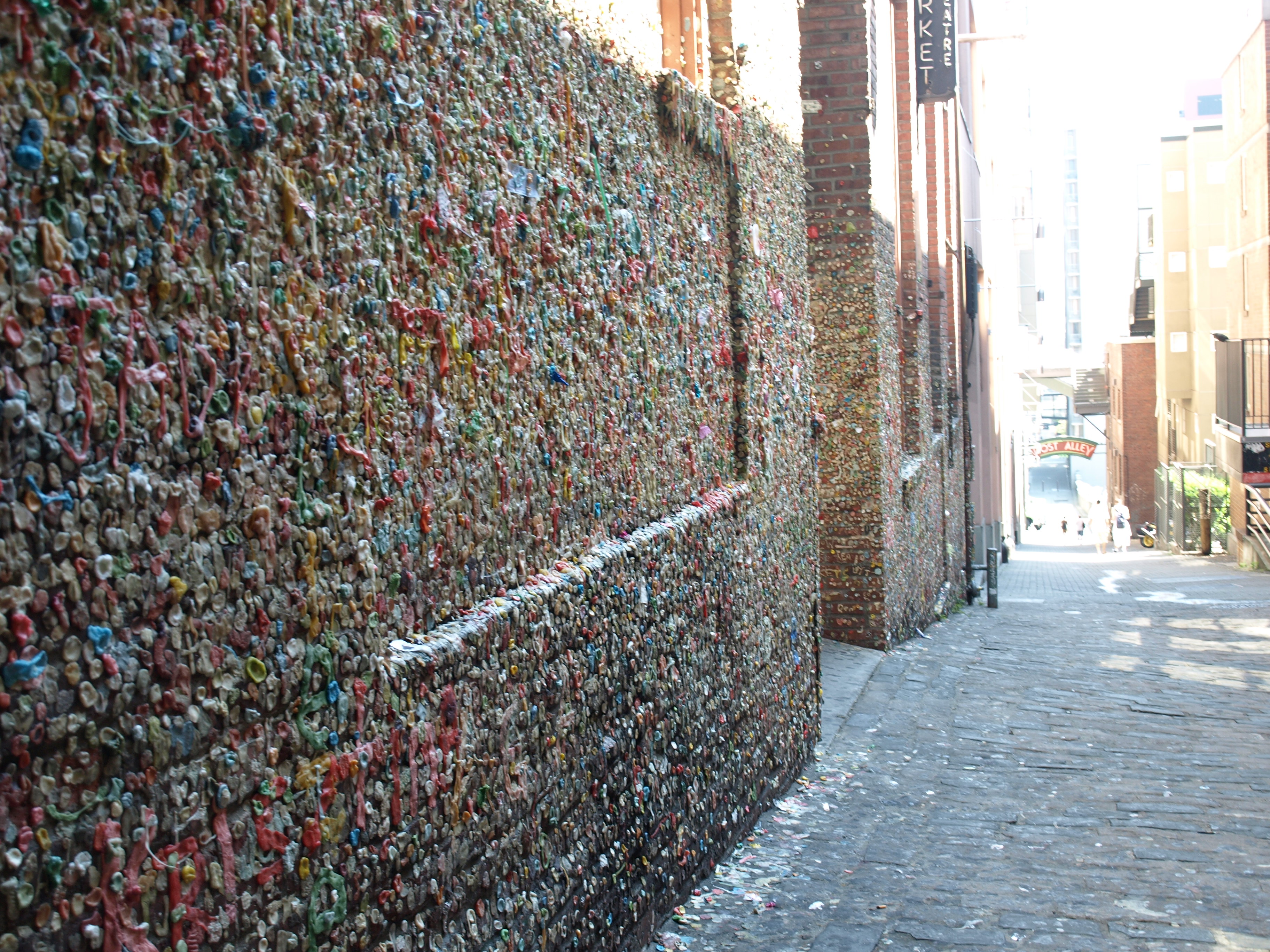
Ah, gum. Who doesn't love gum? You'll get no argument here, chum. Yum, yum, um, yum. The first time I quit smoking, it was with the blessed succor of Carefree Sugarless Wintergreen Bubblegum. Nowadays, I'm anti-aspartame and more into "health food gum," especially the kind with Xylitol in it. (Hint: it's more natural than it sounds.) Getting rid of one's gum is always a bit of a challenge, usually done solo and even a little stealthily. But clearly there is an id-like joy in simply pulling it out and squishing it onto a large mass of other people's. And Seattle, it seems, is just the place to do it. (Although Bubblegum Alley in California is older and deserving of a visit if you're blowing through town). According to Wikipedia, the Chewing Gum Wall was named one of the "top 5 germiest tourist attractions in 2009, second to the Blarney Stone." While you chew on the idea of august and augmented gum, try and get rid of any samples of today's typo still sticking to your catalog. (We found 29 cases of Augum* in OhioLINK, a few of which look like correctly spelled foreign ones.)

(Detail from the Wall, Pike Place Market, Seattle, courtesy of Wikimedia Commons. Click pic for better view of the chewed!)

Carol Reid

Wednesday, March 24, 2010

Tuberclo*, etc. (for Tuberculosis)

March 24 is World Tuberculosis Day, a time for raising awareness and bearing witness to a dreadful and deadly disease. Ninety years ago, the world witnessed a plague of pandemic proportions when an estimated 50 million people died of the "Spanish Flu." During WWII, Americans were warned that "loose lips sink ships"; opening one's mouth to spit, cough, or sneeze was seen as equally treacherous, if not altogether traitorous, during the First World War as well. One theory blames the high rate of influenza among U.S. soldiers on the mass inoculations they were subjected to in the military. Another argues that many seemingly healthy young adults who perished from the 1918 flu were in fact infected with TB. Some people find such ideas fanciful, but consider that throughout history, tuberculosis has been variously associated with vampirism, fairies, masturbation, and the notion that it confers a burst of creativity on men, and beauty on women, just before death. Today, controversies continue to surround the H1N1 virus and vaccinations in general. A handful of typos for the word tuberculosis were found in OhioLINK today, including Tuberclo*, Turberc*, Tubrec*, and Tuberclu*. Please remember to wash your hands after stopping their spread in your own database.

(Prevent Disease: Careless Spitting, Coughing, Sneezing, Spread Influenza and Tuberculosis, Rensselaer County Tuberculosis Association, Troy, New York, 1918, from Wikimedia Commons.)

Carol Reid

Tuesday, March 23, 2010

Kelly + Kelley (for Kelly or Kelley)

Mell Lazarus, creator of the comic strip "Miss Peach," named his cartoon classroom the Kelly School after his hero Walt Kelly ("Pogo"). Lazarus, who was a member of Mensa, knew that there was more to a good education than rote learning and the "Three R's" and spent 45 years drawing that conclusion. Miss Peach's pupils (Marcia, Ira, Arthur, Francine, Freddy, and the rest) were often concerned with weightier issues than spelling, but the name of their school is a tricky one, if the 245 hits on Kelly + Kelley in OhioLINK are any measure. Although not all of those records contain the discrepancy in question, a sufficient number do, projecting this as a typo of "highest probability" on the Ballard list. Lazarus clearly enjoyed puns, naming the Kelly School principal "Mr. Grimmis" and the gym teacher "Mr. Musselman." He was accorded the National Cartoonists Society's Humor Comic Strip Award for 1973 and 1979 and the Reuben Award for Outstanding Cartoonist of the Year in 1981. He even managed to get "Miss Peach" pulled from syndication on November 29, 1963, with a strip in which one of the characters fantasizes about saving the president's life. (The strip in question was created shortly before the JFK assassination.)

(Miss Peach record album, from the LP Cover Lover website.)

Carol Reid