Monday, October 11, 2010

Frued* (for Freud*)

Close, but no cigar, as Sigmund Freud might have said about our typo of the day today. Our Freudian slip, if you will. Actually, the quote that's normally attributed to Freud, though he may in fact not have coined it, is: "Sometimes a cigar is just a cigar." (Groucho Marx similarly might not have invented, but often made use of, the carnival barker phrase: "Close, but no cigar!") In any case, our subject today is not the Father of Psychoanalysis, but rather his niece Martha. I would not insult this charming children's author and artist by claiming that she suffered from "penis envy," but she did seem to think her books would succeed better as the purported work of a man, so at the rather precocious age of 15, she chose "Tom" as her official nom de plume. After attending art school in London, she met and married the writer Jankew Seidmann. Together, they founded the Peregrin-Verlag, a Berlin publishing house specializing in religious material for Eastern-European Jews. Seidmann-Freud created many works for children, including The Magic Boat: A Book to Turn and Move, described on Amazon as "a collection of stories and poems, together with a puzzle and a Punch-and-Judy play, illustrated with movable pictures." Sadly, Martha followed her beloved Jankew even unto death. The Great Depression of 1929 caused them to go bankrupt and both husband and wife committed suicide. We found 13 instances of Frued* in OhioLINK, although one was for the (presumably) correctly spelled Carl Gustave Fruedenberg.

(Peregrin and the Goldfish, by Tom Seidmann-Freud, cover art courtesy of Page Books.)

Carol Reid

Friday, October 8, 2010

Furtur* (for Future, etc.)

The future of fur is a matter of some debate, given the current awareness of "animal rights" and the often egregious, if rather effective, tactics employed by activist groups such as PETA. But coats, hats, and other accessories made from fur—as well as feathers, wool, and various hides and skins—have been worn for both warmth and cool by all kinds of people in all sorts of places and times. Our grandfathers (or, in some cases, great-grandfathers) didn't really qualify as hep cats unless they were yelling, "23, skidoo!" while wearing raccoon coats. Fur is the title of a 2006 fictional "biography" of photographer Diane Arbus, starring Nicole Kidman. And Venus in Furs, published in 1870, was an erotic masterpiece by Leopold Sacher-Masoch (from whom we get the word masochism). Those are just a few examples of fur as cultural signifier; animals and our wearing of them go back much much further, all the way back to the beginning of man. (See, for example, those cave women in their leopard-spotted bikinis, as optimistically depicted in movies like One Million Years B.C. with Raquel Welch.) Getting back to the future, we uncovered 18 examples of Furtur* (all of them typos, except for one Italian song called Furturella) in the OhioLINK database today.

(
Dutch portrait of Felicina Caglio Perego di Cremnago, 1842, from Wikimedia Commons.)

Carol Reid

Thursday, October 7, 2010

Anotomy, etc. (for Anatomy, etc.)

The ankle bone's connected to the leg bone, the leg bone's connected to the knee bone, the knee bone's connected to the thigh bone ... now hear the word of the Lord! If you want to know about all the bones in the body and exactly how they connect, you'll want to take a look at Gray's Anatomy, something I'm sure most of you have done at one time or another—if not the MD-sanctioned reference book, then the Emmy-nominated TV show (which I should probably note is spelled with an E rather than an A). Henry Gray was born in England in 1827 and eventually appointed Lecturer on Anatomy at St. George's Hospital Medical School in London. He and a colleague, Henry Vandyke Carter, dissected unclaimed corpses from hospital and workhouse mortuaries for a year and a half, thanks to the Anatomy Act of 1832, an activity which helped form the basis of the medical textbook Anatomy Descriptive and Surgical. Gray died at the premature age of 34, but his landmark book has undergone numerous editions since then and is still in print today. We diagnosed several variations on today's typo in OhioLINK: six cases of Anotomy, two of Anatony, and one each of Anatamy and Amatomy. (There were none for Anotamy.) You can also try truncating these examples in order to pick up typos for words such as anatomical, but if you do, be aware that your results might include some foreign words or variant spellings, which may or may not accurately reflect what's on the piece in question.

(Bandapparat OSG und Fuß, von fibular, Grey's Anatomy, 1918, from Wikimedia Commons.)

Carol Reid

Wednesday, October 6, 2010

Anti + Anit (for Anti)

In light of Monday's posting about Rapunzel (who let down her hair so that someone else might climb up it) and Tuesday's, which was all about drugs, our typo for today is Anti + Anit. (One record found in OhioLINK yesterday included this rather neat twofer: "... anit-HIV durgs ...") And, after contracting a head-scratching case of head lice last summer from some small-fry long-hairs I happen to know, I shudder a bit to show you this a portrait of the little bugger, the egg of which is known as a nit. (Some people urge the application of a drug-based shampoo to get rid of lice; others obtain good results with olive oil or mayonnaise.) We located 17 samples of this irritating typo in OhioLINK this morning. Comb carefully through your catalogs to locate more, and don't be afraid to nitpick.

(Male human head louse, or Pediculus humanus capitis, 2010, from Wikimedia Commons.)

Carol Reid

Tuesday, October 5, 2010

Durg, Durgs (for Drug, Drugs)

Today's typo is not from the "high" section of the Ballard list, but it still needs to be diligently dug out of our databases. We found four cases of Durgs in OhioLINK (one being the correctly spelled subject of the terrifically titled Goldglove Gid, the man of grit: or, Desperate Durg's desperate scheme, published in 1891). We had a bit better luck with just plain Durg, which garnered 21 hits, slightly more than half of which, however, referred to Durg District, India, or other proper names and foreign words. So, not to be a real drag here or sounding a mournful dirge or anything, but let's all try and remember to "Just Say No" to Durgs (for drugs).

(Actress Dorthy Short as Mary Lane in the 1936 propaganda film Reefer Madness, from Wikimedia Commons.)

Carol Reid

Monday, October 4, 2010

Tresspass* (for Trespass*)

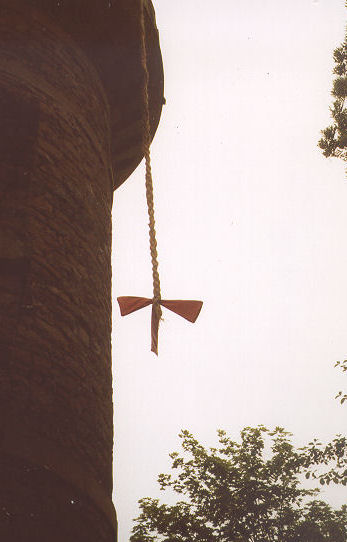
If any girl could ever truly be said to have had golden tresses, it's probably Rapunzel—a likely party girl too, in a way, since she really knew how to let her hair down.* For many years, Rapunzel and her long blonde braids passed the dark dismal days locked up in a tall tower as part of a witch's curse. No trespassing was allowed. But eventually she and an admiring prince conspired to engineer her rescue. She used her plaits as a rope ladder (putting a whole new twist on tossing one's hair to get a guy's attention!) and soon had the man of her dreams climbing in through her window. Actually, this story is quite a bit more complicated than I remember it, what with garden gleaning, pregnancy cravings, skeins of silk, and an indeterminate number of babies and length of hair. It does have a happy ending, though, and so will you, as soon as you clear your catalog of today's typo, which was found trespassing seven times in OhioLINK, and 83 times in WorldCat.

* "Rapunzel, Rapunzel, let down your hair, so that I may climb the golden stair."

(Rapunzel's tower in the "fairy park" of Ludwigsburg, Germany, 2003, from Wikimedia Commons. Click for closeup of braid.)

Carol Reid

Friday, October 1, 2010

Adventru*, Adventuo* (for Adventur*, Adventuro*)

I once put together a conference program about the image of librarians in popular culture. The panel comprised a couple of people who'd been involved with the making of the movie Party Girl, along with our own version of the Parker Posey character, who also happened to head up NYLA's Film and Video Round Table. It was fairly entertaining, perhaps even enlightening, and I believe the consensus was that if this was the popular image of a librarian, maybe we could finally put "The Stereotype" to bed.

In the feature film Rome Adventure, the lead is a young college librarian named Prudence who stands up to a phalanx of old biddies chiding her for loaning out (her own copy of!) a book called Lovers Must Learn by Irving Fineman. (An actual book, in fact, published in 1932, and the story the movie itself is based on.) Rather than be fired for sharing a book the library board had deemed unsuitable for co-eds, she breezily leaves her job with no love lost, except for the one she might be missing out on if she doesn't arrive in Rome as soon as possible! Prudence may be a tad naive (assuring her worried mother that her "new friends"—two men she's met while vacationing in Italy—care only about protecting her "chastity," an assertion she qualifies somewhat wryly by noting: "from each other"). On the other hand, she's smart, gorgeous, winsome, and ... Suzanne Pleshette, for God's sake.

She gives a lovelorn student a romance novel and now she's ready for a novel romance of her own. Despite the surprisingly well-done book-banning set-up, this is basically a chick flick adventure film co-starring the hunky Troy Donahue (whom Pleshette was afterwards moved to marry, if only for a little while.) It's about as realistic as a steamy, 3-star Hollywood love story, with filmstrip-style footage of Italy and featuring a librarian in 1962, probably could be. And yet the love scenes, as well as that scene in the library, kind of rang true. This movie can naturally be found on the A list at Martin Raish's marvelous website, Librarians in the Movies. Adventru* turns up four times in OhioLINK, and Adventuo* three.

(Soundtrack album cover for Rome Adventure, from Flickr.)

Carol Reid